Critical Review

CRITICAL REVIEW/ Final Major Project


Student Name: Freya Chauncy

Pathway:  3DCP


FMP Title: A London Home


1. Briefly describe the context of your project and how you used a range of critical perspectives and approaches to initiate your idea.

My project is focused on my own home and how it has changed over its lifetime, as well as how domestic spaces and the area have changed over the years. I use many different sources to research and gain a wider perspective on my project area for example, the census, artists and visits.

2. Describe how research, analysis and evaluation helped you to feed ideas and develop concepts?

My research allowed me to start thinking deeper into my concept of the home and how they can become part of our identities rather than just a practicality, evaluation helped me to expand my ideas and take me in different directions and to experiment more with different concepts and formats.

3. What specialist skills and methods did you use to realise your project?

To realise my project I used many different skills for example researching and creating my own wallpapers, one block printed and one linocut, I also had to work with wood and using exact measurements to adjust the cabinet to make it exactly how I needed it.

4. How did you integrate practical, theoretical and technical understanding to solve complex problems within your FMP? Please use examples.

A problem I had during my FMP was bringing my ideas into reality and putting my dolls house together in 3D form which would be very technically complex, I found my solution while doing historical research, discovering that dolls houses were made in cabinets during in the 17th and 18th centuries. Another problem I overcame was having a “spare” drawer in my cabinet which I ended up using to give my project a whole new perspective.

5. What systems/ tools did you use to plan your project and how effective were they to organise and develop your work?

To plan my project I used my timetable laying out what i would do each week from research to actually making the final piece, however i didn’t always follow this as my ideas and processes lead me in their own directions. Instead I found my blog much more useful for organising and planning as I used it to write down everything I had done and things I hoped to do. It also gave me a chance to think about what I had done and develop my work further.

6. What type of evaluative and reflective records did you keep? How did this help you develop your learning? Please use examples.

To reflect and evaluate I use both my blog and my sketchbook, I find my sketchbook useful for writing quick notes and reflecting visually for example sticking in pictures i am inspired by and  sketching out different ideas for my final piece, this has helped me develop my learning by giving me somewhere I can always put down and look back on processes and work. My blog was also very useful as somewhere for more in depth written reflection, which was useful as it allowed me to think more about my research and give a personal response back.

7. Who is your intended audience? Describe techniques and methods you used to communicate your idea to them.

My intended audience is very open as I think everyone can relate to it in their own way. The cabinet seem ordinary from the outside but invites the viewer to open it which then reveals a miniature world inside, this makes it seem secretive and special. My piece may also be very nostalgic to people in multiple ways, maybe they remember playing with a dolls house when they were ora child or maybe the even had an avocado green kitchen. However there is also a shock element to it which many people could relate or sympathize with.
8. Overall summary: Describe the key points to take away from this experience. In what ways will your approach to creative production change in future as a result

What I will take away from this experience is to be more open to changing of plans and ideas, I have learnt that your first idea is not always the best or the one you will end up pursuing but is more likely something you can use to start your initial research and develop from. I have also learnt to be a lot more varied with research using different sources such as books, films and not just the internet, also to not just focus on things directly related to my project as you may find inspiration from something completely different. This experience also allowed me to reflect on society when dolls houses were first created and today.


The ‘Spare’ Drawer – FMP

My plan was always to have four rooms so when I found a cabinet with two shelves and three drawers it was a slight problem but I decided to use it for something different and take this opportunity to tie my project together. The reason I did not want to have a bathroom in my dolls house was because my home, being victorian would not have originally had one.

My first idea was to fill the drawer with spare dolls house furniture, wallpaper and fabric. This would also make the piece interactive however I was not sure if that was something I wanted as it would turn it into more of a functional piece.

I decided I wanted to put something in the drawer which would contrast with the dolls house and break it up, making it feel less congruent. After thinking about this for a while I decided to feel the drawer with condoms, the reason I chose to do this was because it juxtaposes how dolls houses were used to teach girls how to run a household or for women to use to create idealised interior or for people to store prized possessions, which would be talking points at parties. My dolls house, being disguised from the front, is secretive only revealing its secrets when its opened, and condoms are in themselves secretive, something that people hideaway in drawers. This drawer is meant to disconcerted the viewer.

However I still felt as if the drawer was missing something, recently, like many other people I have been shocked by the news of the Alabama abortion laws, women not having control over their own bodies in the 21st century is something very terrifying and hard to believe. Maybe we are going back to the time where girls were destined only to be housewives and were taught how they would run a home using a dolls house. this reminded me of the dystopian novel The Handmaids Tale, the quote “A rat in a maze is free to go anywhere as long as it stays inside the maze.” stood out to me as we are tricked into thinking we now live in an equal society but how far have we really come. Are we just trapped within our own dolls houses just thinking we are free?


The Rooms – FMP

Although my idea for the format of the dolls house has changed my idea behind it hasn’t, each room will reference actual people who lived in my house or people who (with historical research) I have created. I have already specified the exact people in previous blog posts and my sketchbook. I am not making the rooms exactly accurate to theme or people but rather my own interpretation and image of it like how dolls houses always have been, and like dolls houses my rooms won’t be complete but will always have room for more and opportunities for interaction.

The victorian bedroom home to a lace maker and his family –  lace hanging from a dressing screen

IMG_1024

The 1930s living room home to a fascist man and his mother – fascist leaflets/ posters

IMG_1005.JPG

The 1970s kitchen home to a teacher and her family – books, untidy

IMG_1011

The contemporary room which is based off of my own bedroom will be personalised with pictures/ drawings on the wall as well a being messy.


A Cabinet – FMP

Although my original idea was to make a more traditional house-looking dolls house after seeing the ones made within cabinets I became more interested in making one like that. In terms of practicality it may also be easier as creating the structure of a dolls house would probably be quite challenging.

I decided to look for an old second hand cabinet as it would have more of a story behind it similar to stories created within dolls houses. I ended u finding one in my shed and was told by parents that it was actually in the cellar of my house when they first moved in, it has obvious marks and damages and you can also see the cabinet has been painted over with a few different colours through its lifetime.

WdR0K%8TRVaIDgyceJzWKA.jpg

I think it will be interesting to have rooms in the drawers and for people to be able to pull them out and peak in. From the outside it will still look like a cabinet making the inside a hidden and secretive world where your imagination can take over. On the cabinet I will have things like photo frames and a vase making it seem more natural and as if it is in a room. In the photo frames I will have pieces of the wall papers I printed for the rooms, displaying them in a different out of context way and also giving a hint of what is inside.

IMG_0765

IMG_0774


Joseph Cornell – FMP

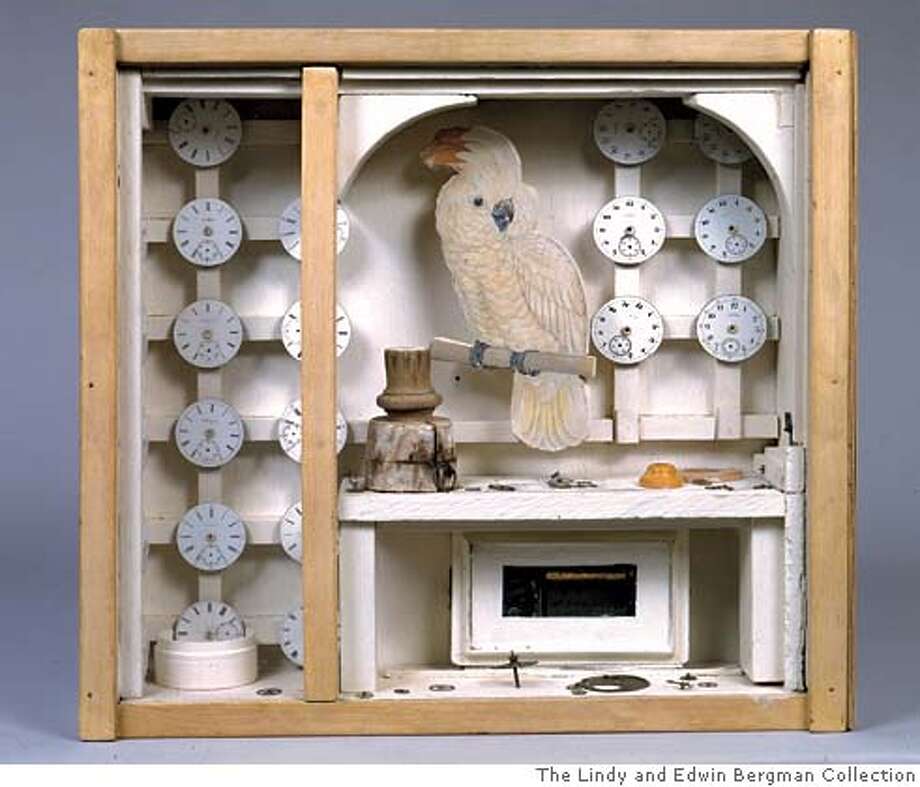
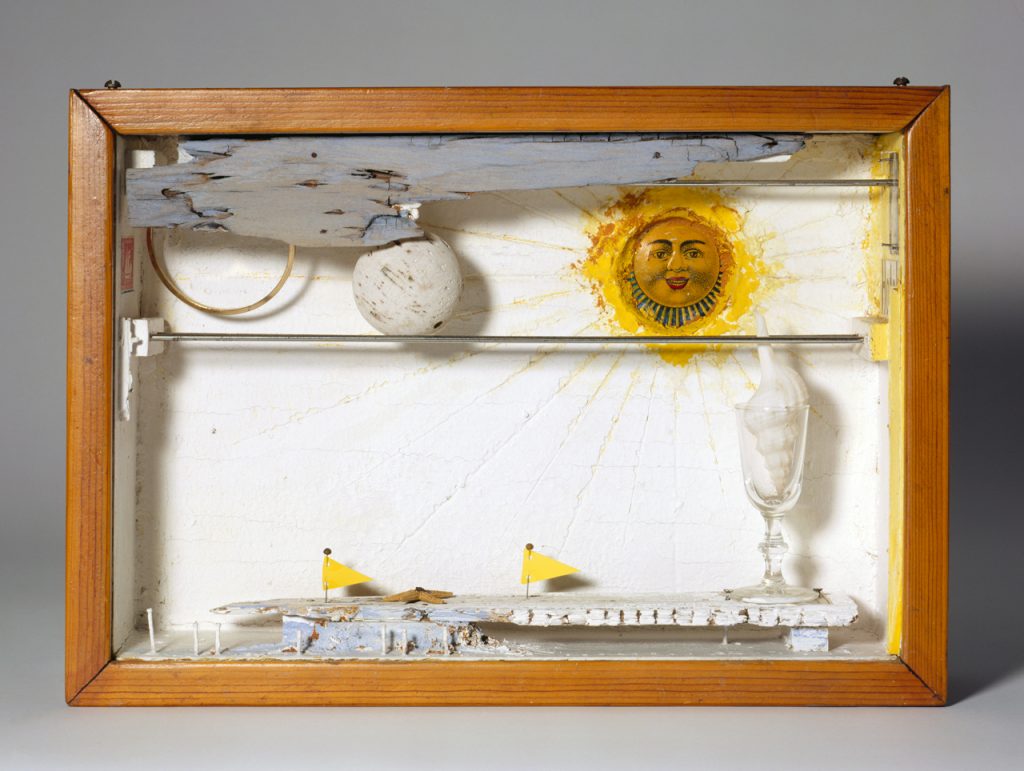
Looking and reading about how people use to have dolls houses inside cabinets and would often put precious or unusual things inside of them reminded of the artist Joseph Cornell, who made small boxes and put everyday or interesting objects inside of them turning them into fascinating creations.

I find it interesting how the random objects arranged into these little boxes can become something so different to look at and be interpreted in many different ways and somehow create a story.

Image result for joseph cornell Image result for joseph cornellImage result for joseph cornell

The Childhood Museum – FMP

There are over 150 dolls houses in the childhood museum spanning 100s of years, some very traditionally house like and others in more interesting formats such as House on a Bureau. There is a massive amount of detail in the dolls houses, from pots and pans, curtains and picture frames.


Rachel Whiteread has collected around 150 dolls houses over the last 20 years and in 2017 she curated them into sculptural piece for the childhood museum, the dolls houses were set out as if they were in a slope like a hillside community. They were all brightly lit but bare of furniture creating an eerie, nostalgic atmosphere. the variety of styles makes it reminiscent of an English suburban town.

In a film along side the installation Rachel Whiteread describes how she was always fascinated by dolls houses and the stories within in them and leaving them empty allows the viewer to wonder what happened.

https://www.vam.ac.uk/moc/exhibitions/placevillage/


Dolls House – FMP

Baby House

Dolls houses date back to the 16th century and were often known as baby houses they were not toys, but trophy items or conversation pieces and were often made as mini replicas of wealthy families homes to keep record. In holland dolls houses were also a way to display wealth but were made in fancy cabinets and often of idealised interiors and full of precious objects. These dolls houses would have been worth the price of a small house. Dolls houses were also used to teach young girls how to maintain a household and become a lady of the house. Dolls houses were not made as toys until 20th century but became hugely popular when they began being mass produced. they are still very popular not just with children many adult collect and spend £1000s on dolls houses and their furniture.

I think that dolls houses have remained so popular because they allow people to use their imagination as well as keep complete control and imagine a level of perfection and idealism in a home.

Rachel Whiteread – FMP

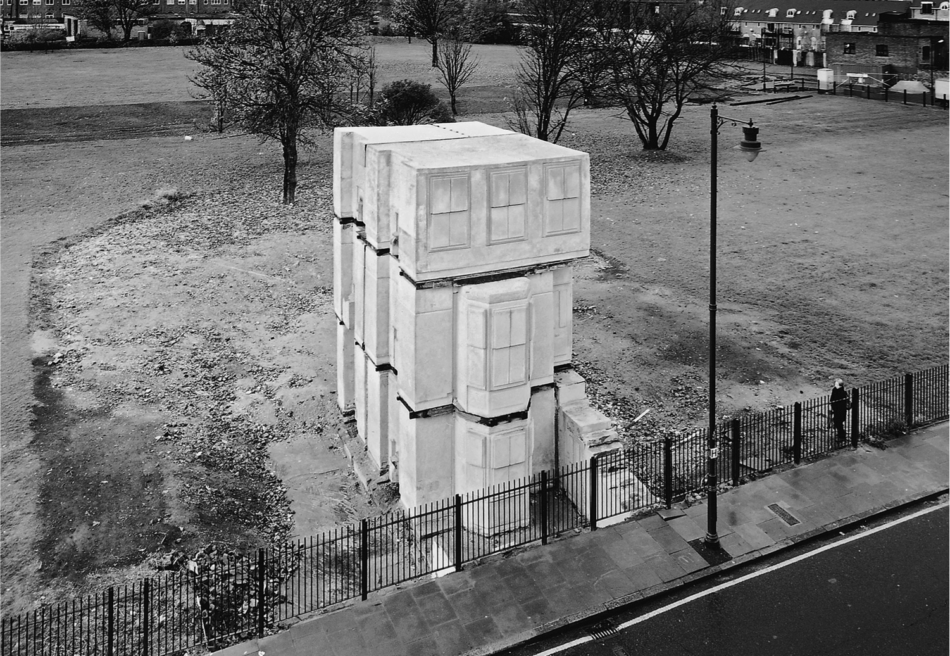
Rachel Whitereads House (1993) was a sculptural piece in Bow, it was a full concrete cast of a soon to be demolished terrace house, the last on the street to remain. The result was a huge, brutal sculpture which created a massive impact for the 80 days it stood on Grove Road. I really love the House as it shows a completely different side to a domestic space as well as making an important comment on the regeneration of the area in the 1990s.

Image result for rachel whiteread the house


Whiteread has also created many other domestic sculpture pieces exploring everyday objects in the home.

Image result for rachel whiteread

Image result for rachel whiteread


Image result for rachel whiteread


Wallpaper – FMP

Wallpaper is a very effective way of identifying and showing different eras in the home, its interesting to see how different patterns and colours changed and what was most popular. Wallpaper like a lot of other interior items was a great way to show off your wealth.

Victorian wallpaper was block printed, often in floral patterns it was a big feature of the home usually the most bright thing in a candle lit, wood heavy room. William Morris was by far the most popular designer of the time. I block printed a piece of wallpaper in a floral pattern using pink ink inspired by the wallpaper inside Dennis severs house.scan_96634318_2019-04-16-13-37-16.jpg

Taking inspiration from the bright colours of the 70s (particularly avocado green) and big bold prints I printed some wallpaper using a Lino cut. Wallpaper was hugely popular during the 20th century so its a really good way to look at the changing styles of the home, however it is now a lot less common with people now preferring to have solid colour painted walls.
scan_96634318_2019-04-16-13-35-33-1.jpg


The 70s – FMP

The 70s were an iconic time for interior design, bright colours, extravagent patterns and shaggy carpets, the style is instantly recognisable. I love how bright and fun it is, completely contrasting to the popular clean white look of today. there was a lot more freedom for expression within the home.


Avocado Green is what sticks out for me within the 70s era, its very love or hate, its in your face and can not be hidden.

Design a site like this with WordPress.com
Get started